← The Almanac

This Week · Perseverance

Perseverance — what keeps you going when it's hard?

For littler ones: When something is really hard, what helps you keep trying?

Perseverance — What keeps you going when it's hard?

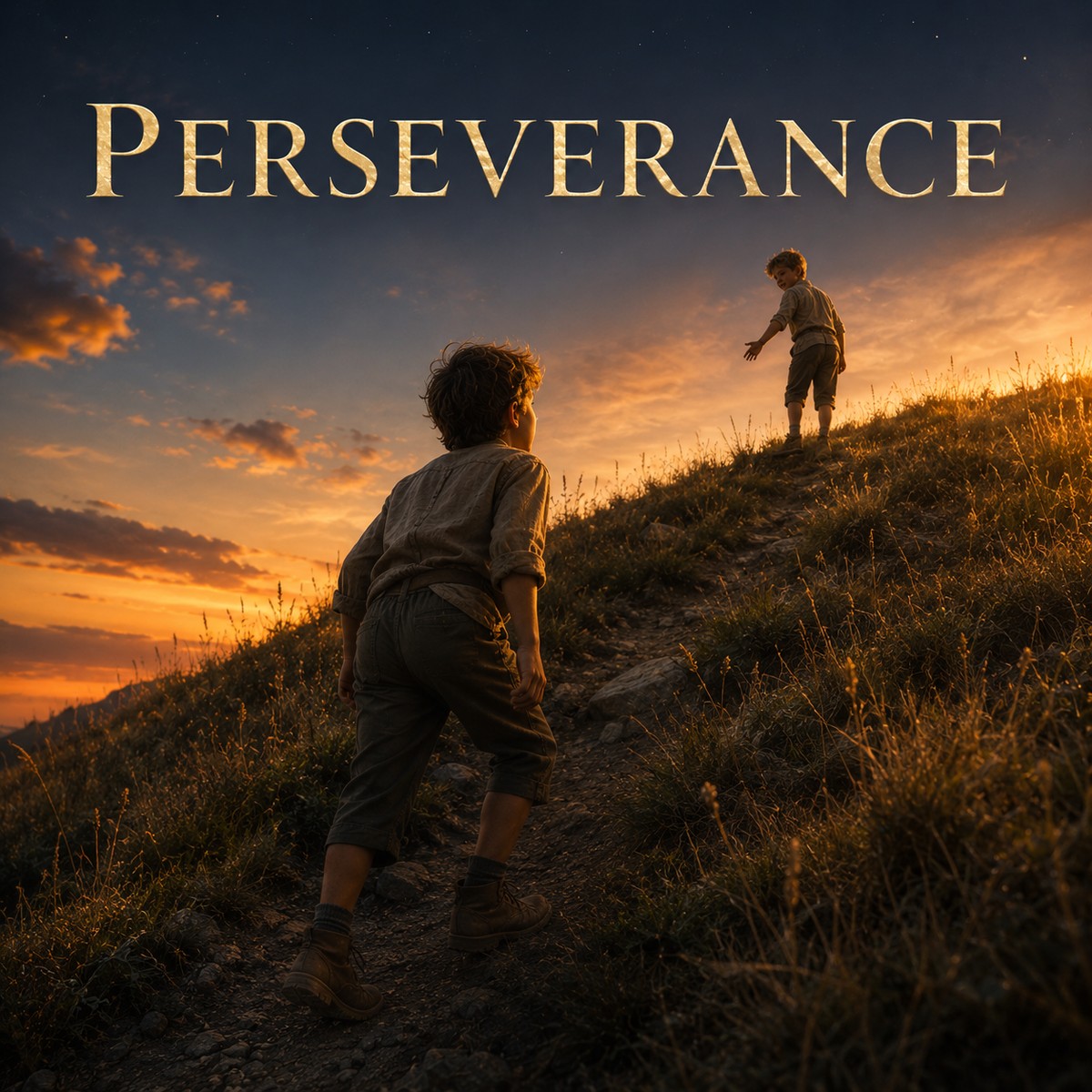
This week we're wondering about perseverance — about keeping on, even when keeping on is hard. Here's the question worth turning over at the supper table: what keeps you going when it's hard? When you've tried and tried, and it still isn't working — what is it that makes you pick it up one more time? We'll wonder about it alongside a sharpshooter named Annie, a man named Norman who spent years coaxing a better wheat out of the ground, and Sequoyah, who set out to do a thing folks said couldn't be done.

This week's stories

American

Annie Oakley, Little Sure Shot

Phoebe Ann Mosey was eight years old, small for her age, when her father died and the cabin grew cold. She took down his long rifle — nearly as tall as she was — and walked into the woods to feed her family. She hunted every day, paid off the family farm by fifteen, and grew up to astonish kings, queens, and a Lakota chief who named her Little Sure Shot. The grit in this one is quiet: a girl who simply kept going out, morning after morning, because someone had to.

American

Norman Borlaug and the Wheat That Fed the World

An Iowa farm boy watched hungry men come walking up the road during the Great Depression, and he never forgot them. He failed his college entrance exam, then worked his way through anyway, and spent twenty patient years in Mexico crossing one wheat plant with another, by hand, season after season. When a great famine was predicted across India and Pakistan, his short, strong wheat was loaded onto boats — and the famine never came. Many millions of lives were saved.

American

Sequoyah and the Talking Leaves

A Cherokee silversmith who could not read or write any language set out to do something no one had ever done: write down the Cherokee tongue. His first plan failed, and his notes burned, and his neighbors said he'd been touched in the head. He started over. It took him twelve years — eighty-five symbols, one for every sound — and when his six-year-old daughter read a message back to the astonished chiefs, a whole nation learned to read its own language. This story is kept and told by the Cherokee Nation, in Tahlequah, Oklahoma, where the syllabary is still taught today.

Talk about it

  • What's something you kept working at, even when it was hard? What made you stick with it?
  • When something isn't working, does it help more to keep trying the same way — or to stop and try a different way?
  • Who helps you keep going when you want to give up?

A new question every week.

Listen together in the app — short audio stories for kids 4–10, at bedtime, on the drive, in the drop-off line.

Join the family

Get the stories that built America in your inbox

New stories, the weekly Almanac, and family read-aloud picks. No spam — unsubscribe anytime.